

Editor’s note: This op-ed was originally published in Ricky Sutton’s newsletter, Future Media.
We just learned that Google’s long-time privacy chief and director of competition law are leaving.
A week earlier, a third of the team that managed law enforcement requests, helping investigators during school shootings and kidnappings, were let go.
Meanwhile, the shrinking trust and safety team are working overdrive to contain the disastrous launch of AI Overviews.
A union statement on the layoffs carried a prescient warning.
Stephen McMurty, an engineer on Alphabet’s Workers Union, continued:
“Critically, this includes emergency requests that support law enforcement efforts to geolocate individuals in crisis, including victims of kidnappings, child sexual abuse, and school shootings, as well as missing persons and those at risk of self-harm.
As Google continues its layoffs to further gratify shareholders, it’s unclear what consideration was given to the critical role these workers play in saving lives, responding to court orders, and supporting individuals trying to access the data of recently deceased loved ones.”
He added a near-sighted pursuit of profit would “jeopardise critical public safety initiatives, Google’s legal and regulatory compliance, and the security of users and their private data”.
We didn’t need to wait long to see the details.
Last week, 404 Media revealed thousands of privacy incidents, ranging from accidental voice recordings of children to bugs that caused private YouTube videos to appear publicly.
Google earns more than $600,000 per minute, as Ricky has pointed out, and yet it can’t figure out how to guard its own secrets.
How should we trust them to protect billions of users’ information?
As the teams responsible for logging and fixing these issues shrinks and fragments, one wonders how quickly – if at all – these issues will be dealt with in the future.
Was this leak a plea for help from anxious, burned-out insiders, or did those let go decide to blow the whistle?
Meanwhile, another major leak containing 2,500 documents that divulge more than 14,000 of Google’s secret search ranking attributes surfaced.
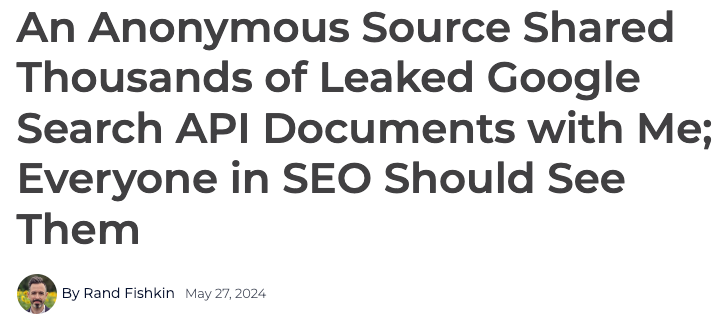
Some have theorized that this was the product of accidental, automated publishing of Google’s internal repository.
Others speculate that this was an effort by insiders frustrated by Google’s reckless and embarrassing roll-out of AI Overviews.
It wouldn’t be the first time that employees have spoken up.
Or – my working theory on this particular incident – perhaps it was an intentional PR-orchestrated distraction therefrom.
Buried within these leaks are truths hiding in plain sight.
Weʼll likely never know what really happened, but does it even matter?
These theories are two sides of the same coin.
We’re witnessing a cultural breakdown, one that’s becoming increasingly apparent as the cancer spreads.
We’re watching a company that has become too large, too complacent, and too arrogant in its dominance to safely, or effectively, function.
Why would they bother to avoid scandal, crisis, or harm? Even as its products break, and its dirty laundry seeps out, its profits still grow and grow.
Trust me. Iʼve lived my own version of it, with its pervasive dominance a key part of my own story.
The growing number of leaks we are seeing are no coincidence.
People donʼt make these types of decisions to speak out until they have tried everything else.
Until they have been ignored, muzzled, and retaliated against. Until they believe that inaction is no longer an option.
Until the culture has become so broken, so badly, that it has compromised the product, and they believe wholeheartedly that they’re on a sinking ship.
It’s not until insiders feel certain that the decisions being made are so shortsighted, misguided, and harmful that they risk harming people, customers, or shareholders, and more often, all three.
A seven-year Google veteran, David Kiferbaum, shared his own articulation of just this a few months ago.
“Previously accessible Google executives have disappeared, once acceptable questions can’t be asked, and a dispassionate arrogance has taken hold.
“Unsurprisingly, the company’s deficient culture is showing up in the product, most vividly in its recent Gemini debacle.
“As a user and shareholder, I’m concerned.
“If Google doesn’t work to restore its ethos of open questioning, it will repeatedly suffer the same unnecessary embarrassment it has endured over the past months, much to the detriment of its shareholders and users.”
When insiders tell you that a company is breaking, that a culture of silence and fear that runs so deep that people are afraid to tell the truth, we are well-served to listen.
When that company controls the global information ecosystem and has the power to impose fear and force that silences a $600 billion industry, we’ve no choice but to act.
Make no mistake. This isn’t capitalism, this is Big Tech tyranny.
Don’t Be Evil.
Among the musings of the SEO wonks, as they dig through thousands of pages of documentation, a recurring theme has been that Google lied to us.
Of course, they did. They lie to everyone. But this is good news.
Why?
Because amidst the steady stream of revelations, flubs, and abuses of power, and as publishers get pushed to the absolute limits of their tolerance, more people and companies that have been subservient are willing to say the quiet parts out loud.
Control is Google’s strategy. Controlling the narrative is no exception.
They have bought their way into every room, and every closed-door meeting.
Their playbook is nothing if not consistent. Lure you in. Change the rules. Make it really, really difficult to leave, then take, take, take.
Yet, even as the advertising industry watched this happen first to consumers, and then to publishers, they have still walked directly into the same trap.
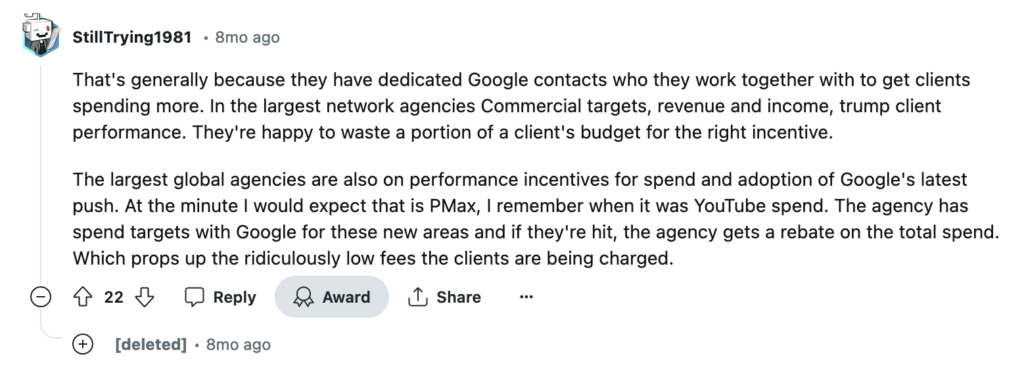
Google dangles their advertising incentives under the noses of the largest holding companies, capitalizing on their short-sightedness as their revenue is increasingly derived not from serving advertisers, but from playing pinball with their ad budgets.
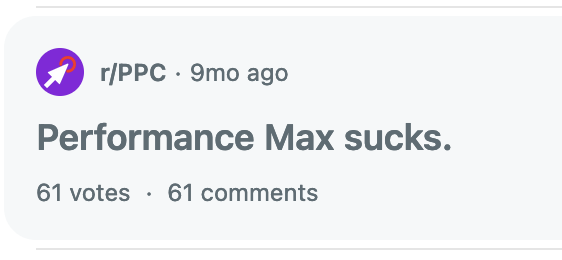
If you want to test this for yourself, I invite journalists to try to get a holding company agency executive to say anything critical about Google’s Performance Max on record.
Better yet, ask them what they think of PMax and compare the sentiment against the tenor of the comments among users on r/PPC.
Google brandishes industry trade associations as sword and shield, using them to parrot their talking points to deflect scrutiny, while mobilising an army of lobbyists to advance their political agenda.
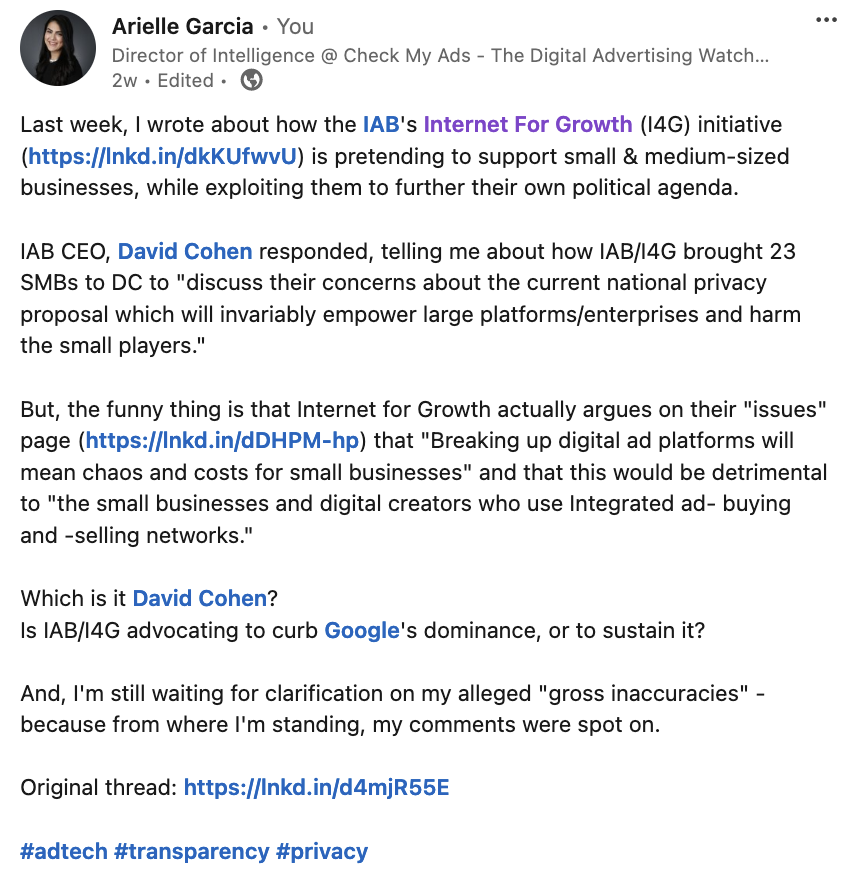
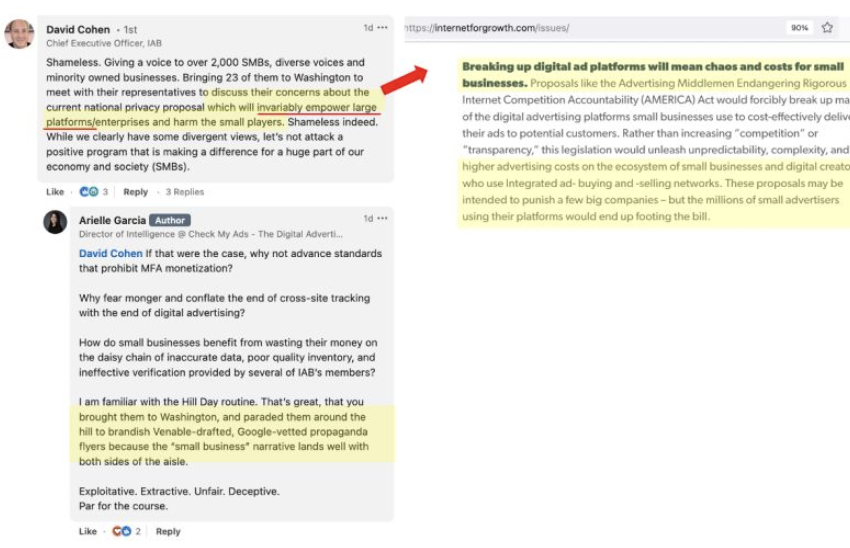
My personal favourite is an exchange I had recently with Interactive Advertising Bureau (IAB) CEO David Cohen.
The IAB’s membership is comprised of “media companies, brands, agencies, and technology firmsˮ but it’s an open secret where they get their marching orders.
I wrote about how the IAB’s Internet for Growth initiative shamelessly lobbies for ad tech and Big Tech under the guise of advocating for the very small businesses that suffer the most.
In the course of David’s condescending posturing, he accidentally contradicted his own group’s lobbying agenda. Oops.
As we know well at Check My Ads, sunlight is a powerful disinfectant.
Google will do anything to keep the light out of their dark corners.
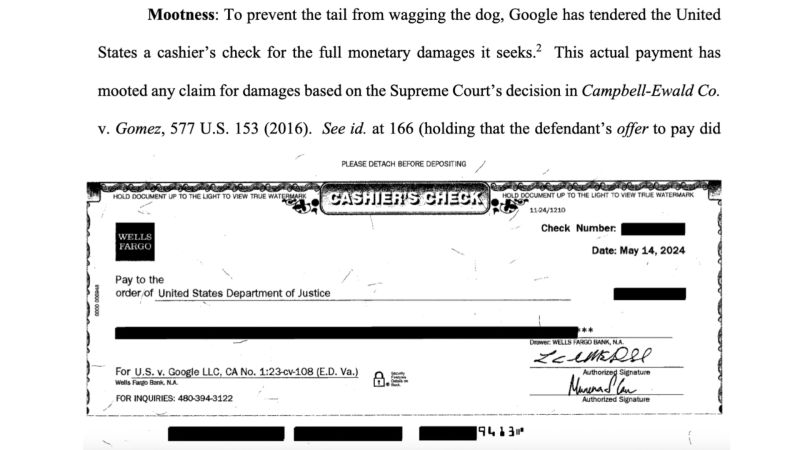
They literally cut the DOJ a cashier’s cheque to avoid a jury of peers.
But, even more vulnerable to ultraviolet rays are the vampiric middlemen that thrive in Google’s shadows. They outright burst into flames in the sun.
As the landmark ad tech antitrust trial approaches, I’m intent on exposing these less talked about but equally pervasive ways Google wields its money and power to:
- Keep the entire digital ad industry silent.
- Push their propaganda.
- Relentlessly advance their interests, and
- Get away with doing as they please.
Watch this space.
We have to keep our eye on the ball.
As I looked over the search ranking leak findings, I was reminded of a particular scandal that the industry collectively wall-papered over.
A quality and transparency firm, Adalytics published a report last year, covered by the New York Times, about YouTube running adult-targeted ads on kids’ videos.
Within the 200-page report, one of the findings was that:
“YouTube appears to create an undisclosed persistent, immutable unique identifier called the X-Goog-Visitor-ID which gets transmitted to Google’s servers even when a consumer is watching made for kids video content.
“It is unclear for what purpose Google is collecting this undisclosed identifier.”
Google never acknowledged, or clarified, what this identifier is used for.
- With nobody pushing for answers, the trade press hasn’t followed up on the issue.
- There’s nothing that I could find in Google’s documentation that explains or even references it, and
- Next to nothing substantive that exists on the internet about it
Apart from this blog published earlier this year, also about YouTube’s apparent covert tracking.

I was reminded of this recently when the search ranking leak surfaced Google’s possible use of Chrome data, which they consistently had denied.
This bears striking similarity to their incognito mode tracking settlement – and all of the other times they’ve been caught doing things with data they promised they wouldn’t.
Cracks are starting to show, and the looming ad tech antitrust trial will undoubtedly bring many more damaging revelations to the surface.
Now is no time to get distracted.
While we’ve been watching them embarrass themselves and tell us to eat rocks, they’ve been laser-focused on positioning themselves to sustain their dominance, at all costs.
The DOJ is asking for, among other things:
“Divestiture of, at minimum, the Google Ad Manager (GAM) suite, including both Google’s publisher ad server, DFP, and Google’s ad exchange, AdX, along with any additional structural relief as needed to cure any anti-competitive harm.”
If this were to happen, it would still leave the buy-side of their ad tech empire intact, along with their ownership of Chrome, YouTube, Gmail, Android, and all their other massive pools of data and inventory.
If Google’s aggressive push to drive Pmax adoption was an early indicator of its plan to double-down on its owned-and-operated kingdom (toddler-clicks, and all) then AI Overviews removes all doubt.
The threat AI Overviews poses to publishers is the same one Pmax poses to agencies.
And yet, the largest agencies aren’t just accepting it, they’re actively working to promote it, and shield it from criticism.
And they’re not only signing their own death warrants.
Pmax and its black-box algorithms enables Google to quietly and nimbly move money into its O&O inventory, largely out of view, and whenever it needs.
Against this backdrop, Privacy Sandbox is effectively Google’s way of giving the industry a bucket of water and telling it to go paint the fence, while it doubles down on its O&O empire.
Meanwhile, the opacity Google uses to blind advertisers also helps the behemoth tell whatever story it wants to its shareholders.
I was asked a question this week by a colleague that sent me digging into Google’s 10-K. Here’s an exercise for you:
- Can you tell where DV360, Google Ads, and the rest of their buy-side ad tech revenue is reflected?
- Is Pmax revenue part of Google Search & Other? Is it split up by inventory type?
- Where is “Search Partners” and other extension network revenue falling?
From where I’m standing, the story is whatever Google wants it to be.
| Segment | Description | What Google says is included | 2023 revenue | % of total revenue |
| Google Search & Other | Including revenues from traffic generated by search distribution partners who use Google.com as their default search in browsers, toolbars, etc. and other Google owned and operated properties like Gmail, Google Maps, and Google Play; | Search Gmail Maps Play | $175 billion | |
| YouTube | YouTube properties | YouTube | $31 billion | |
| Google Network | Including revenues from Google Network properties participating in AdMob, AdSense, and Google Ad Manager. | Sell-side publisher monetization products | $31 billion | 13.4% |
| Total advertising revenue | $237 billion |
We know that Google’s access to data is its power.
In this piece alone, I’ve highlighted more examples of where it can be used, abused, or mismanaged, in ways it promised it wouldn’t.
As we look ahead, we ought to remember that any commitment from Google to restrict use of its data to bolster its ad business is only as good as our ability to detect and enforce against the circumvention of such restrictions.
And that hinges in on two things:
- Meaningful access to its data and systems, and
- Our willingness to talk about these things out loud.
I, for one, would love to know what X-Goog-Visitor-ID is and what it’s used for.
We all should.
And, maybe, some of you that are reading this will make it your business to help us find out.