

When a bullet whizzed across former U.S. President Donald Trump’s ear over the weekend, social media exploded.
Like any breaking news situation, there were facts — but not enough to immediately satisfy people’s thirst for answers. There were well-intentioned mistakes. There were also people drumming up conspiracies like it was their job (which, in some cases, it kind of is).
Here’s a quick guide on how to cut through the chaos in any breaking news situation, keep yourself informed, and maybe stop the spread of mis- and disinformation while you’re at it:
Step one: Slow down
We could start and end the list here: The best thing you can do in the aftermath of a breaking news event is to relax your thumb, stop scrolling, and wait for multiple trusted sources to figure out what’s going on.
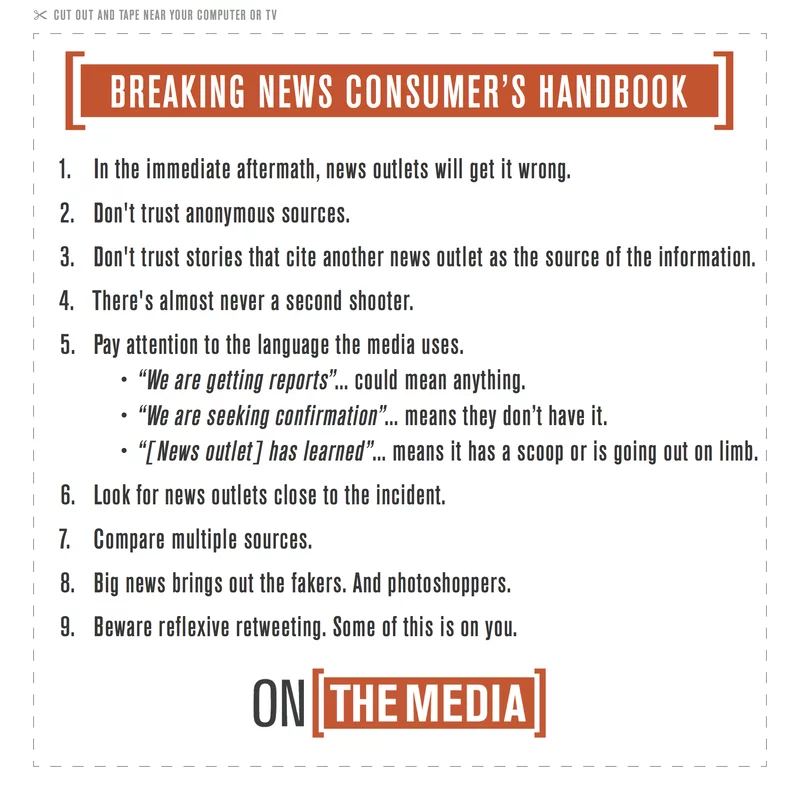
Because, as On The Media writes in its Breaking News Consumer’s Handbook: “in the immediate aftermath, news outlets will get it wrong.”
This doesn’t mean you should stop trusting them. But it does mean that, in those early hours after a major event, it’s a good idea to slow down, log off, and avoid repeating or spreading major claims.
Step two: Have trust issues
Lots of anonymous accounts will emerge making big proclamations or claiming to have answers no one is reporting. Some might be trying to go viral, could be loudly misinformed, or even may be angling to profit from ad revenue sharing programs on social media platforms that reward engagement.
We saw this in the aftermath of the Maui wildfires, when an account made a post on X falsely claiming the fires were “caused by a direct energy weapon.” The user behind the account told Check My Ads that the post made them “a few bucks.”
Don’t trust these accounts. There’s almost never a second shooter.
Step three: Check your source’s source
Even trusted outlets can get things wrong. If your second source is relying on the same source where you first heard something, that means they haven’t confirmed it themselves.
If someone is reporting new information, ask yourself: is this claim being independently confirmed by any other reliable sources? Where did this person get their information, and is that source reliable? Could this be AI-generated, photoshopped, or a real photo from a different event?
If you have doubts, don’t share what you’re seeing.
Step four: Maybe don’t post that
Any of us can accidentally become a part of the problem in the wake of breaking news events. It’s easy to reflexively share something shocking with our networks. Mis- and disinformation prey on our emotions.
It’s on all of us to think before we post.
Bonus: Are you an advertiser?
If you’re an advertiser, there’s something small you can do that could make a huge difference: stop blocking news from your ad buy.
While you likely aren’t explicitly choosing not to advertise on news websites, keyword blocklists often rip your advertising dollars away from news articles covering essential issues. If you have a keyword blocklist, keep it specific — short and sweet.
Better yet, make sure reliable news websites are listed in all your inclusion lists.
At Check My Ads, the only nonprofit adtech watchdog, we’re always looking out for how misinformation and disinformation spread and are monetized. We’ve caught Google helping to fund one of India’s worst disinformation outlets. We’ve fact-checked claims from X about why it’s losing advertisers. We even helped expose a Shark Tank weight loss gummy scam that Google was profiting from.
Want to join our ranks and help fight back against the scummy side of digital advertising? Sign up for our newsletter and we’ll tell you how.