

Introduction
With 5.44 billion social network users worldwide, advertisers rely on these platforms to reach these audiences. While the social media advertising model promised to bolster democratic values, and support the marketplace of ideas, in truth, the platform advertising system is broken, and can subject platform users to harmful, unfair, or deceptive advertising because of the platforms’ lax verification processes of the advertisers that pay to place ads. In other words, almost anyone can pay to place ads, and the lack of a verification standard across platforms hurts legitimate advertisers. Different companies ask for different verification documents and engage in different authentication methods, complicating what could be a streamlined process. It is common practice for advertisers to use a mixed networks and platforms approach for paid media campaigns. Depending on the campaign goals, advertisers use, for example, TikTok for brand awareness and Google search ads for conversion. This is where a lack of a standardised verification process becomes a problem. In the long run, legitimate advertisers end up potentially competing with low quality or dangerous ads for consumer attention. This synthetic competition artificially drives up the value of impressions in each platform’s advertising auctions, and the platforms have little incentive to stop questionable advertisers, as they siphon both the financial and data value inwards. The Check My Ads Institute investigated the advertiser verification process for major networks and platforms to demonstrate how verification differs from platform to platform.
Result:
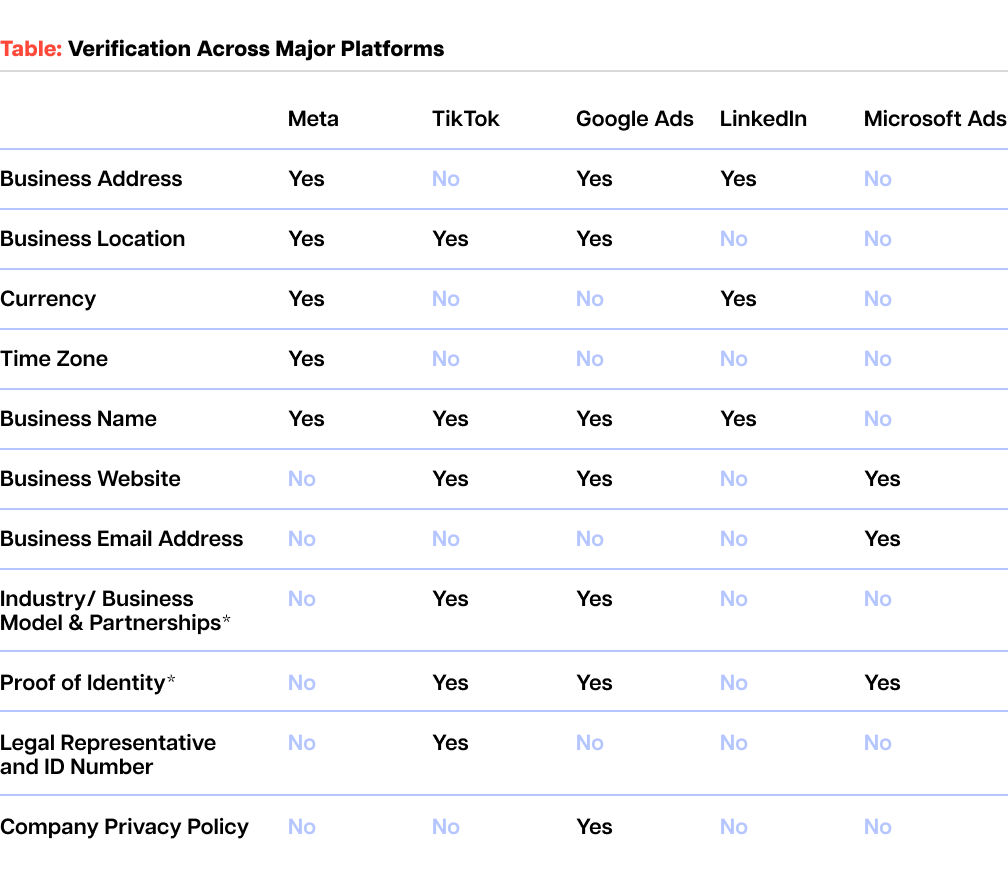
WE FOUND THAT THERE IS NO STANDARD ACROSS PLATFORMS FOR ADVERTISER VERIFICATION.
The only piece of information that was unanimously asked by all platforms was either the business address or business location. Most platforms (except one) asked for the business name in the verification process. Other than these general similarities across platforms, the verification process looked different across every platform, with various questions asked and information sought across two major categories: (1) Proof of Identity and (2) Industry/Business Model Review and Partnerships.
Proof of Identity:
Only three platforms asked for proof of identity: TikTok, Google Ads, and Microsoft Ads.
- TikTok: Included a dropdown where advertisers could provide either a (1) certificate of registration or incorporation; (2) business license; or (3) articles of association.
- Google Ads: Asked advertisers if the company was “Required to have any of the following types of licenses or certifications to provide the products or services [advertised],” listing the following options: (1) government license/regulatory authorization; (2) professional license; (3) vendor license (4) not required to hold the required license. Another business holds the license; (5) no additional licensing is required; or (6) other. In this verification, Google Ads looks to verify companies that operate in restricted advertising sectors, such as finance and pharmaceuticals. Google Ads also requested supporting documents listed in its per country requirements, and additional documentation that supports the legal name of business and business registration location, including, but not limited to: “(1) business registration; (2) licensing; (3) certifications; (4) proof of all relationships; [and] (5) other documents related to business operations and advertising practices.”
- Microsoft Ads: Microsoft Ads requested a (1) public business identifier; (2) a D-U-N-S number; a tax ID; and the business registration number; and had a dropdown to include additional documents, including: (1) formation documents; (2) official government documents; (3) authorized partnership letters or agency appointment letters; (4) government registry letters; (5) official financial filings; and (6) documents to verify the company owns the domain and operates the associated business, including domain purchase invoices and domain ownership records.
Industry/Business Model Review and Partnerships
TikTok and Google Ads both allowed self-reporting of their advertiser’s industry via specific questions regarding the advertiser’s business, while other platforms did not take any steps to learn about the industries of their customers.
- TikTok included a simple dropdown list of industries for advertisers to pick from for self-identification.
- Google asked for qualitative descriptions of (1) the company’s type of business; (2) the company’s business model; (3) the business type (i.e. first party, online sales portal, brand reseller, marketing/advertising agency; and (4) other. It additionally asked if third parties delivered the goods and services advertised, and about any other relationships required to provide the goods and services advertised, and whether the company could be considered an advertising agency or affiliate.
- Google’s thorough approach to collecting this information potentially indicates that this data is valuable to its own business practices. As Google is already a multitool for advertisers (offering ad creation, audience targeting, and publishing services) this information could help it disintermediate third-party providers and become the sole supplier of multiple services to its customers.
Google Ads – Additional Questions
Google Ads had the most rigorous advertiser verification process across all the examined platforms, and to date, the only platform to have initiated a secondary verification process. As an active advertiser on the platform, Check My Ads was selected for additional verification more than six months after initially running an ad campaign. No explanation was given by the platform for why Check My Ads was selected for additional verification.
Additional questions regarding company business and advertising practices that were unique to Google’s verification process included:
- Which of the following best reflects your use of Ads? (Dropdown)
- I run ads for the organization I work for (my direct employer)
- I run ads for another organization, on behalf of the agency I work for
- I run ads for an individual, a sole proprietorship, or an unregistered business on behalf of the agency I work for
- I run ads for my own unregistered business
- Is there another business that manages campaigns or campaign creation?
- Describe how the target audience receives the goods or services promoted in your ads.
- Who creates ad content for this Ads account, including its ads, targeting, and keywords? (Dropdown)
- We create the ad content
- Another business creates the ad content
- Who creates the content of your website?
- We create our website content
- Another business creates our website content
- Who would a customer hold responsible for non-fulfillment of goods or services advertised through Google?
- My company
- Another business
- Do any other parties sign in to the Ads Account?
- Yes others sign in to the Ads account
- No, no one else signs in c. Other
- Are any other relationships required to provide the branding used in ads or shown on the website? This includes, but isn’t limited to, logos, or names of products, franchising rights, or authorized dealer relationships?
- Yes
- No
- Other
- Who pays for the Google Ads account?
- Do you have any other comments or information that may be important
- Do you plan to use this account to run European Union political ads?
- Who pays for Check My Ads Institute’s Ads? (Dropdown)
- a. Check My Ads Institute pays for Check My Ads Institute’s Ads
- Another organisation or individual pays for Check My Ads Institute’s ads
- “This info will appear in My Ad Centre and Ads Transparency Centre and won’t be verified.”
A Note about X
To run ads on X, one must sign up for a business account. When creating a business account, only a non-freemail address was required; no specific business information was requested. Only when creating the advertising campaign did the platform ask for the URL of the business, and prompted the advertiser for a payment method and billing address. Once published, this campaign was marked as “pending premium verification,” which indicated that “campaigns will remain halted until your account is verified.” Becoming verified only necessitated one step — buying a premium account subscription to receive a “verified checkmark.” Within one second of purchasing the premium subscription, the account was verified, and the campaign then proceeded for creative asset approval checks.
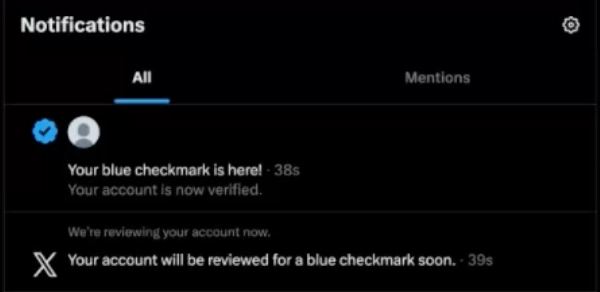
As such, X proved essentially no advertiser verification process to determine whether the customer is a legitimate advertiser or not. It appears that any actor could pay the $10 per month premium charge to become verified on the app and serve ads on the platform.
Why Does This Really Matter? Examples of Fraud
The umbrella of ad fraud is a widespread problem set in the advertising industry. Fraud in digital advertising takes many different forms, from generative AI content farms, malvertising, scam ads, to click and impression farming. AI poses a significant risk of exacerbating and further obfuscating fraud within platform advertising systems.
For example, scam ads already harm people and businesses alike. When scam advertisers participate in ad auctions, it inflates CPMs as legitimate advertisers are forced to compete with fake advertisers for human impressions, while publishers may be unaware of their position as a conduit for potentially harmful ads they host. AI is likely to continue to accelerate the prevalence of scam advertising, among other types of advertising fraud. Ad fraud has serious implications across all sectors, but for political content especially. Fabricated videos of White House officials and congressional representatives have gotten thousands of impressions on Facebook, and ads soliciting consumer information for political scams are only some examples of the massive fraud scheme contributing tens of millions of dollars to Meta’s revenue. Meta’s own internal estimates even projected that 10% of its ad revenue would come from fraudulent ads. A TikTok scam targeting Kenyans deceived jobseekers out of hundreds of American dollars with false promises for job placement in Europe. Google notably took steps to ban advertisers who fake endorsements after a fraudulent ad for Keto gummies claiming to be endorsed by Shark Tank star Mark Cuban spread widely across the internet. However, this was after this scam had proliferated across the internet, prompting Cuban to reach out to Check My Ads for investigation. These few examples are only apiece of massive, pervasive ad fraud across the industry. Internal estimates at Meta indicate that its platforms place 15 billion scam ads a day globally on consumer feeds. Without advertiser verification, this problem will only spiral further out of control.
What solutions should be required? The Check My Ads Policy Platform
At Check My Ads, we advocate for Know-Your-Customer (KYC) requirements that would require advertising platforms acting as brokers to verify the beneficial owners, locations, and legitimacy of every entity they transact with. This includes confirming the physical location of operations, validating domain ownership, and conducting periodic audits of supply chain partners. Advertising platforms should be required to report this information to both their advertiser clients (including media agencies who buy media on behalf of advertisers) and regulators to ensure supply chain integrity. For meaningful transparency to exist within the digital advertising ecosystem, a substantive verification process must be a mandatory prerequisite. This means platforms should at least require business names, location, and proof of business to substantiate ad buys on their platforms. These checks must be conducted before ads can be purchased, not afterwards.
Looking to the Future – LLMs and Advertiser Verification
Programmatic advertising is now popping up in LLMs. Now, when users type in prompts, AI chatbots can generate an advertisement related to the query, creating potential major brand safety problems and consumer data privacy risks. Check My Ads explored the product offering of a company, Thrad, that claims to place ads on behalf of advertisers within LLMs, promising short launch times: “from idea to live campaign in under a minute.”
In the course of our setup, there were no advertiser verification requirements prior to campaign launch. Without understanding who the advertiser is, Thrad appears ready to place ads on LLMs with no identity-based verification of the advertiser required as a prerequisite. This essentially embeds paid content in user-chatbot interactions that a user may believe is organic and unpaid content generation.
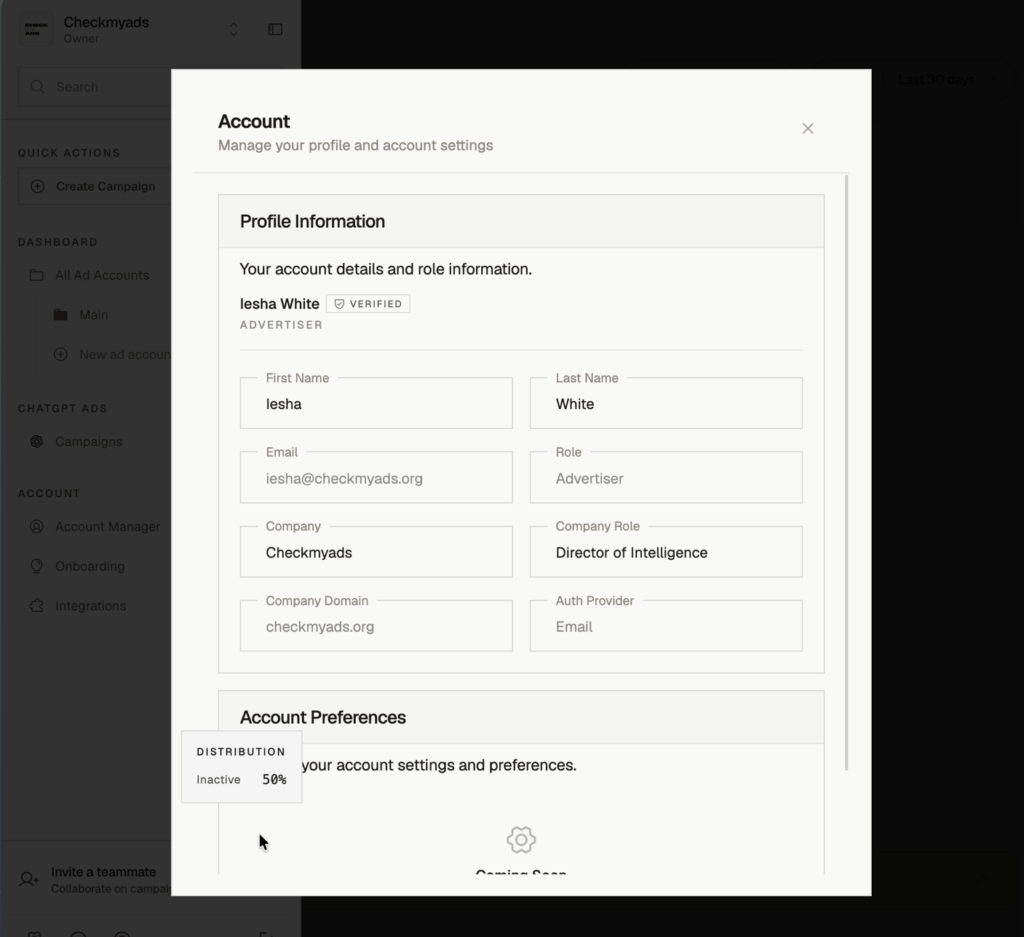
Upon setting up a campaign, a Check My Ads user was listed as “verified” despite not providing any form of proof of identity, in a similar vein to the “verified” badge provided on X. Check My Ads was unable to authenticate if there was a post-launch advertiser verification process similar to Google Ads. After multiple extended launch delays spanning several weeks, Thrad’s team said that Check My Ads did not meet their “ideal customer profile” and is therefore unable to launch a campaign. When asked by the Check My Ads team for more information, their CEO declined to explain what Thrad‘s “ideal customer profile” entails.
Check My Ads was unable to find an ideal customer profile stated on their website, in the ads manager UI, or on any press collateral.
Conclusion
A lack of a codified verification standard across platforms is one of the key reasons that pervasive ad fraud and scams exist in the digital ad industry. It complicates the verification process for advertisers, while its gaps harm consumers downstream. The advertiser verification process is integral for platform transparency, and must be standardized and codified to build trust between consumers, brands, and the intermediaries that connect them. Advertiser verification ensures that legitimate advertisers do not compete with AI-generated brands and their content for the same impression, leading to a more fairly priced digital advertising auction. This also enhances brand safety and improves ad campaign performance, while protecting users from inappropriate or dangerous ads being served on their feeds. Platforms would ultimately benefit from standardization in ad verification transparency by maintaining integrity, fostering quality control across the digital advertising industry, and building trust with consumers and advertisers.