

Elon Musk’s X placed ads for dozens of brands in the replies below posts that appear to violate the company’s rules against hateful content, Check My Ads observed in a sampling of replies and quote tweets.
We can’t put a number on how often these bad ad placements happen. For its part, X has asserted that it’s “extraordinarily rare.”
But there’s a setting buried in X’s ad manager that brands can use to try to mitigate this.
Note: This article contains NSFW images, racist slurs, and antisemitism. Click here to skip directly to directions for opting out of appearing in replies.
Are replies and quote tweets on X a brand safety loophole?
Our investigation was prompted by Elon Musk replatforming known white supremacist Nick Fuentes. While Fuentes himself appears to be demonetized, the white nationalist is surrounded by an ecosystem of accounts, some apparently monetized, that quote tweet him, follow him, reply to him, or spread his message. We analyzed those accounts, as well as other white nationalist accounts that are followers-of-followers of Fuentes.
Throughout our research, Check My Ads saw ads for over 40 different brands below posts that appeared to break X’s rules, including engaging in hateful conduct.
“You may not attack other people on the basis of race, ethnicity, national origin, caste, sexual orientation, gender, gender identity, religious affiliation, age, disability or serious disease,” the X Help Center explains in its written policy statement.
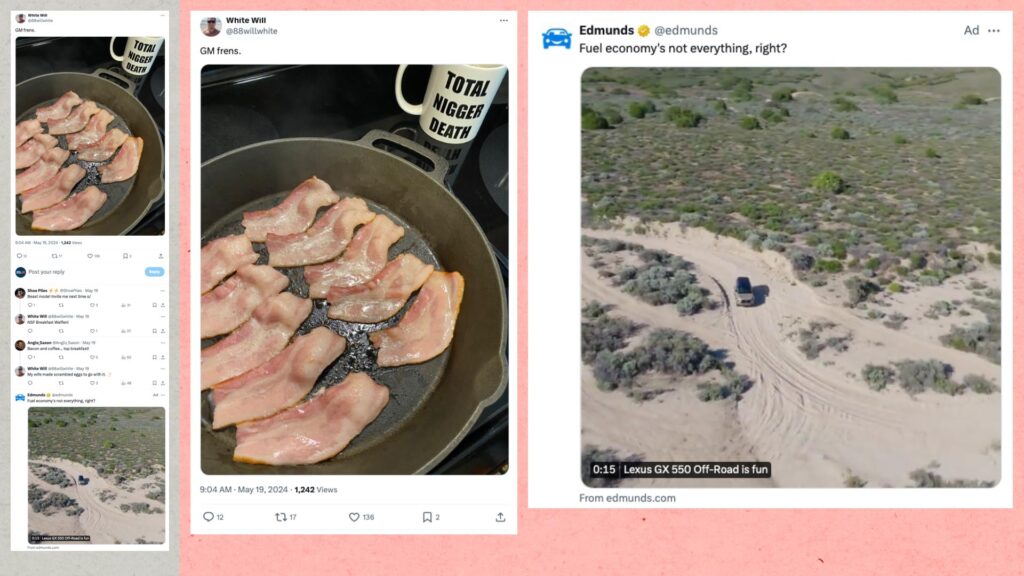
Despite this, we saw ads below posts with a racist cartoon featuring a depiction of a lynching and Nazi iconography, posts with racial slurs, and flagrant antisemitism.
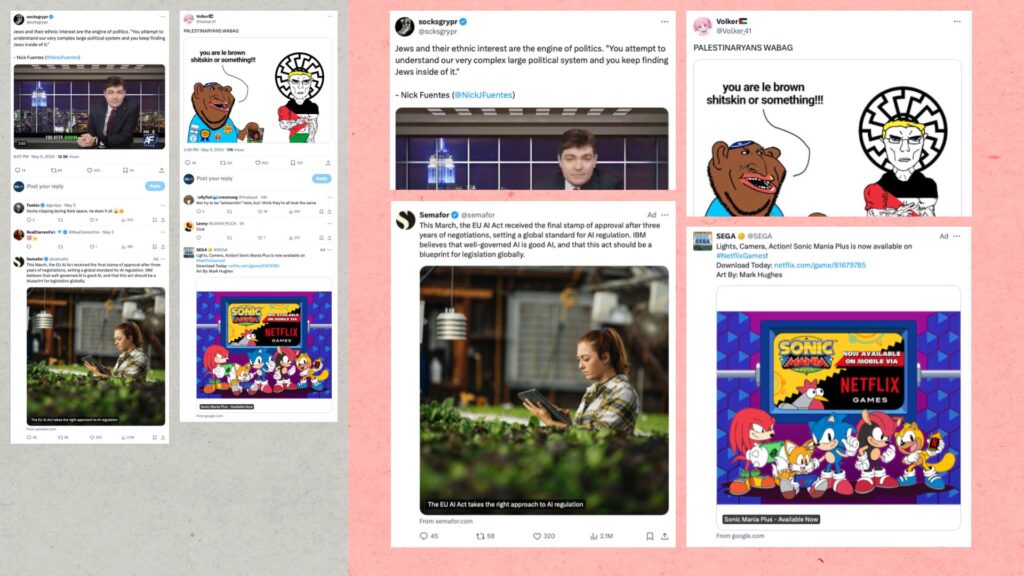
And if brands thought Fuentes’ apparent demonetization means they would never appear next to the white nationalist’s tweets, that’s not the case. Quote tweets of him are fair game for ad placement, based on our research. We saw the same thing happen with Alex Jones.
That means brands could find their ads below the white nationalist’s content — albeit separated by an extra layer of commentary — even when Fuentes’ content appears to violate X’s rules.
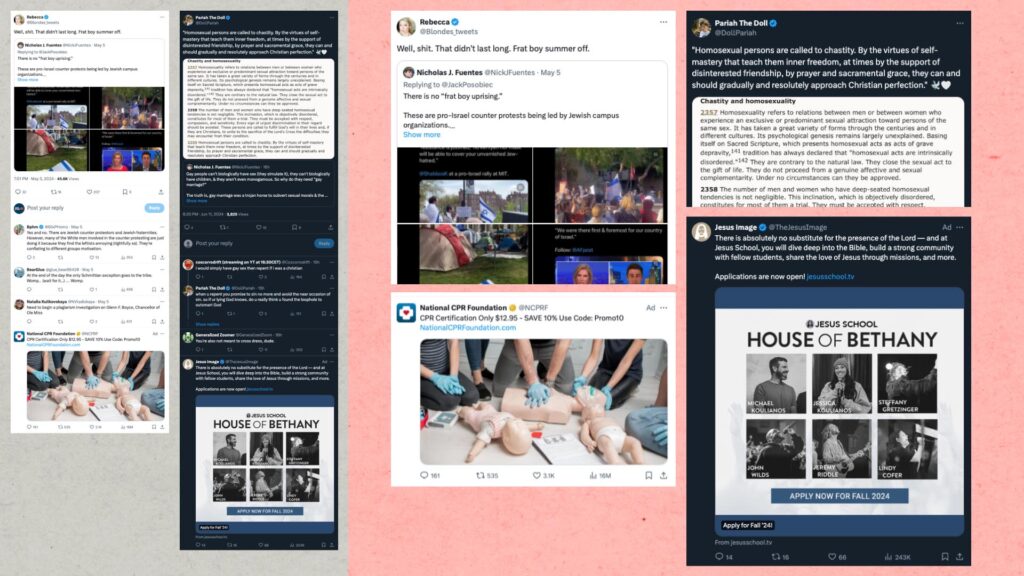
The affected brands were big and small. They included Semafor, the National CPR Foundation, Allbirds, Cheech & Chong, several academic journals, McAfee, Nikon, and a traveling reptile expo called Repticon.
These placements may come as a surprise to some advertisers. Back in August of last year, X made a big show of its new brand suitability controls. But there’s some fine print about those settings: According to X itself, they only apply to the “For you” timeline.
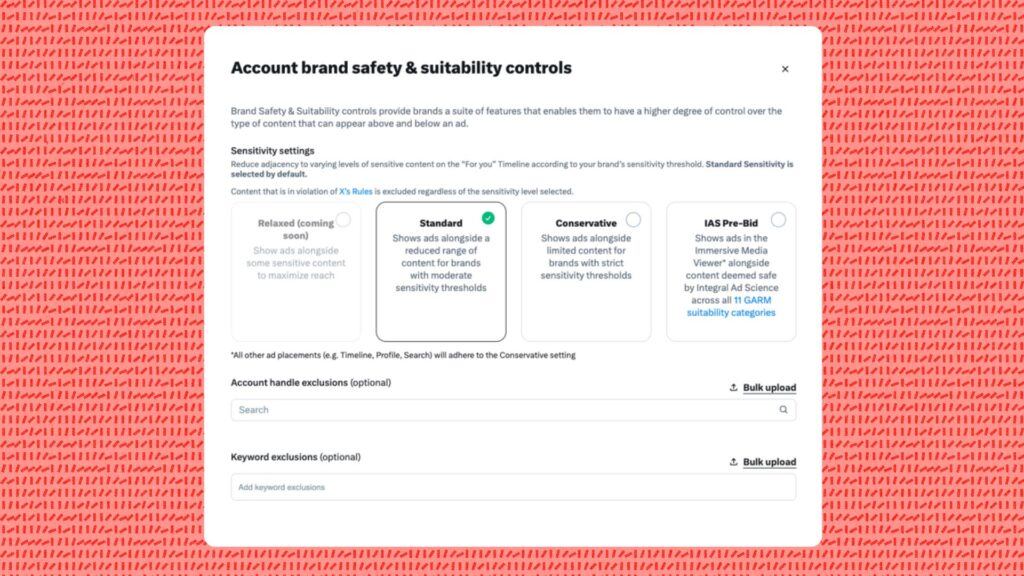
We reached out to all of these brands to let them know where their ads showed up, and to find out more about their ad settings. Just three advertisers responded, including Allbirds and Edmunds.
Allbirds confirmed to us that their safety setting was set to “Standard.”
The third was The U.S. Capitol Police.
Its ads ran below a tweet that said “the Jews” bombed 48,000 civilians but Fuentes did not, and also below an antisemitic quote tweet of Fuentes.
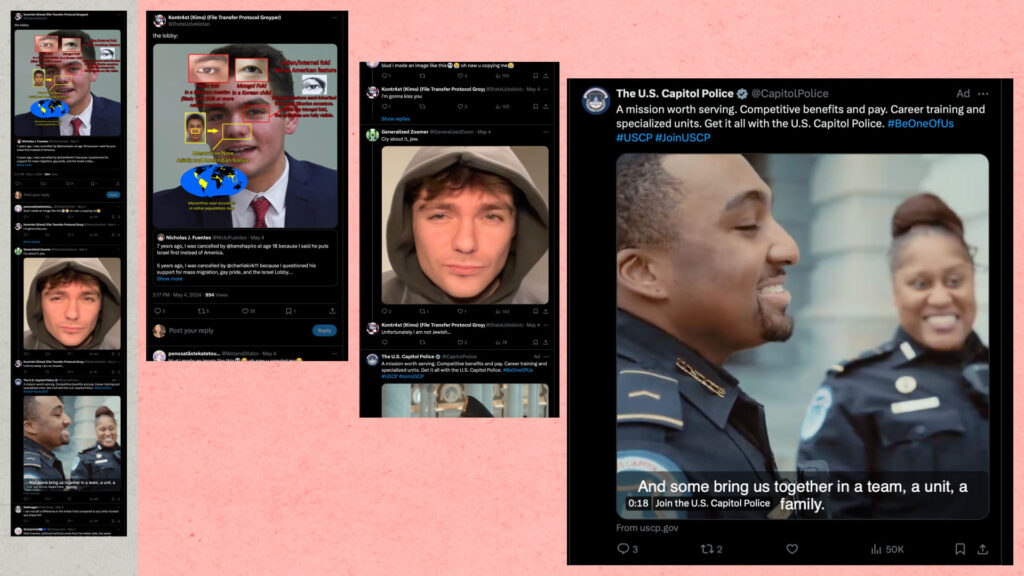
The Capitol Police replied to our email within five minutes.
“THANK YOU so much for flagging this for us!”
We won’t pretend we know how common this issue is. But the fact that it can happen — which we have definitive proof of — is probably enough to warrant some caution.
So here’s what you can do about it.
Okay, I get it. So how do I opt out of ad placements in replies to reduce the likelihood of this happening to my brand?
When launching an ad campaign on Twitter, you can choose between “Simple” and “Advanced.”
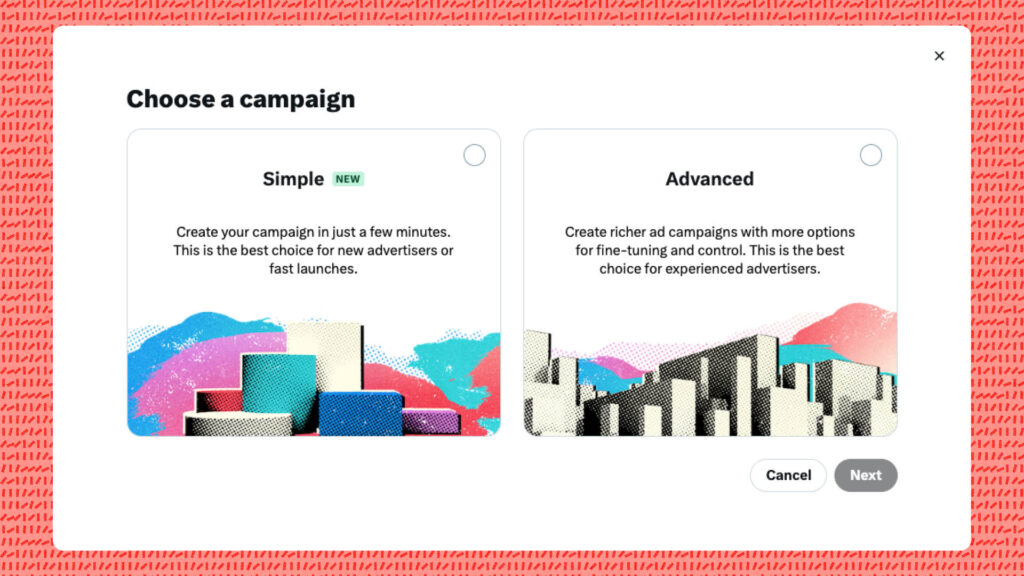
If you already have ads running, or after creating a “Simple” campaign: Go to Ads Manager, hover over the campaign you want to change, then select “edit campaign.” (It’s in small blue font at the bottom left).
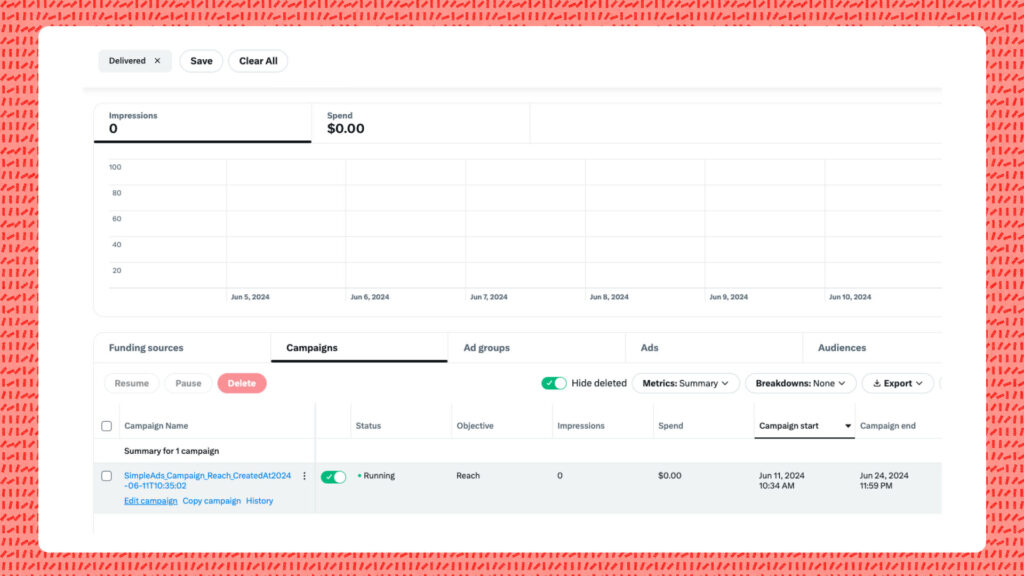
Then click on “Ad group details” in the left-hand rail.
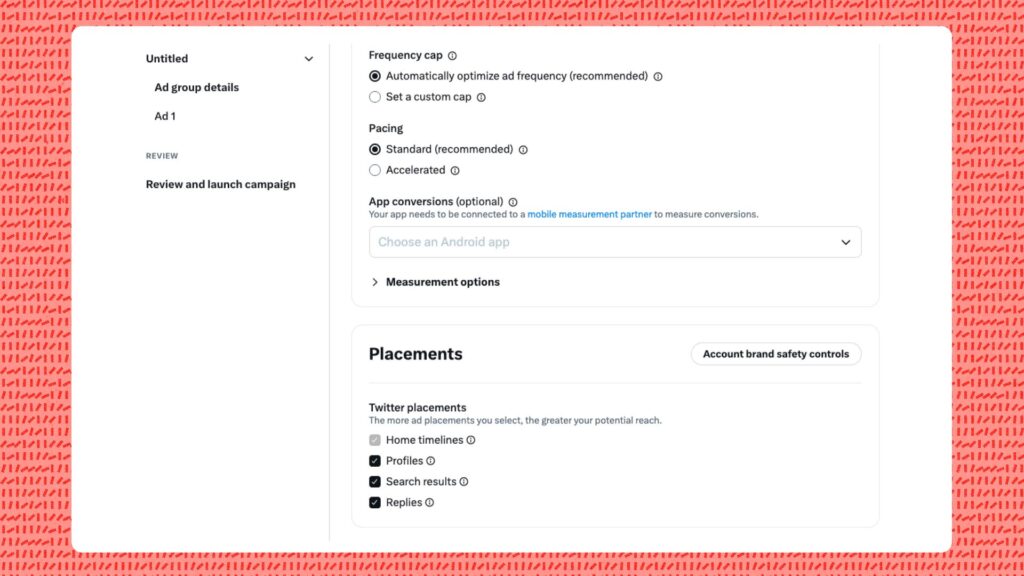
Scroll down to “Placements” and look at which “Twitter placements” you’ve selected. This is where you can opt-out of “Replies.” Go ahead and do that.
(While you’re there, you might also want to opt-out of “Search results.” NBC News has the reason why).
Make sure you hit save in the bottom right, and just like that — your ad campaign on X should be less likely to run alongside hateful content.
If you’re creating an advanced campaign, you will be able to access the “Ad group details” setting before launching.
That doesn’t mean your ad spend on X suddenly becomes totally brand safe, though.
Will this keep my brand safe?
We want to reiterate that we don’t know how often this happens. We just know what we’ve seen with our own eyes: ads placed below hateful posts that violate X’s brand safety promises.
We’re not the only ones who have tracked this.
NBC published an article on June 6 that reported X placed “advertisements in the search results for at least 20 hashtags used to promote racist and antisemitic extremism, including #whitepower.”
In March 2023, The Centre for Countering Digital Hate published a report claiming “Elon Musk has reinstated tens of thousands of accounts, including neo-Nazis, white supremacists, misogynists and spreaders of dangerous conspiracy theories.”
It went on to estimate that “just ten reinstated accounts renowned for publishing hateful content and dangerous conspiracies will generate up to $19 million a year in advertising revenue for Twitter.”
X tried to sue CCDH over this report — but a judge threw out the lawsuit, writing X’s case “is about punishing the Defendants for their speech.”
When we reached out to X about the ad placements we found, they immediately sent us a canned response: “Busy now, please check back later.”
All of this makes one thing clear: while we can’t say how risky advertising on X is, we can say that risk isn’t zero.
If you still want to take that risk, use protection: opt out of ad placements in replies.